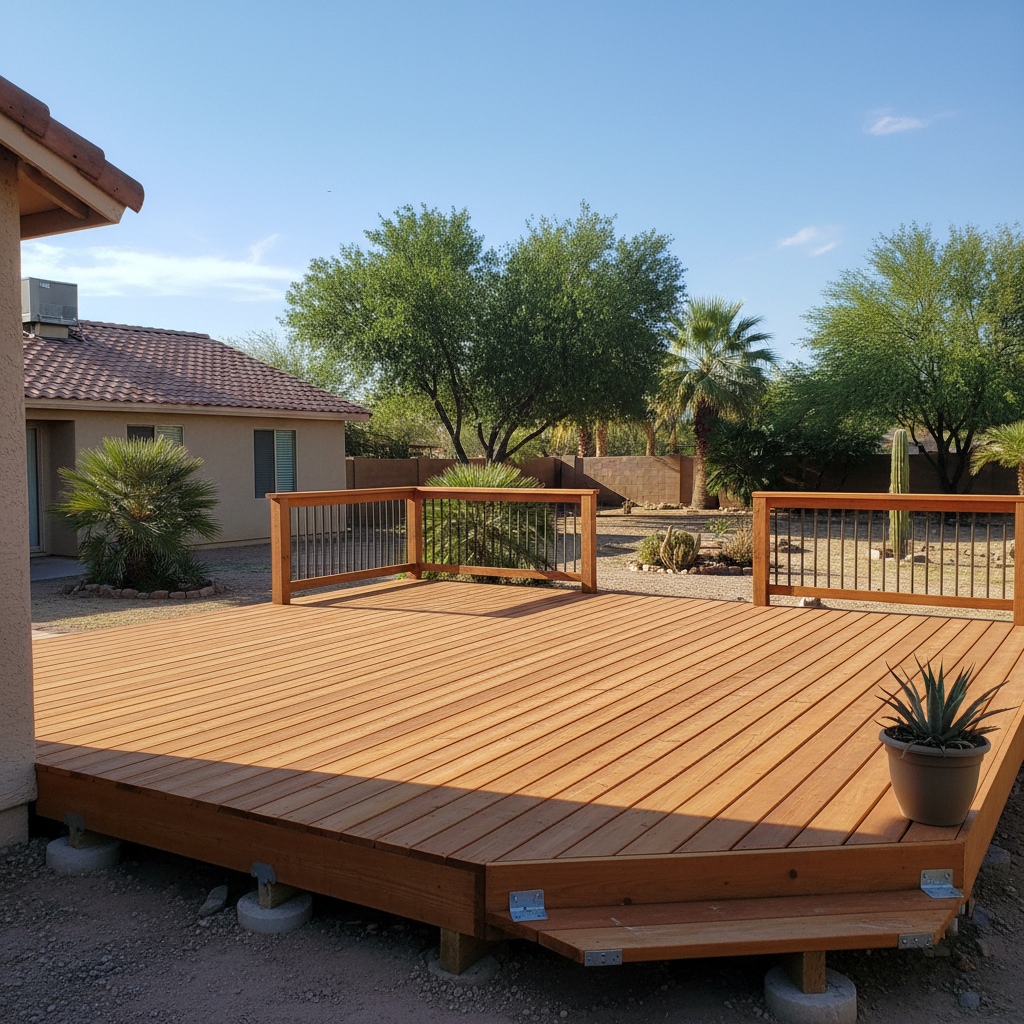
When's the absolute best time to fix that wobbly railing or those cracked boards on your Laveen deck? It's not just about when you've got a free weekend, believe me. Our desert climate, with its scorching summers and surprisingly cool winters, really dictates when you should be thinking about deck repair and, frankly, how long that fix is gonna hold up.
What Laveen's Climate Means for Deck Work
You know how it goes here. We get those brutal summers where the sun just bakes everything. Then we get these gorgeous, mild winters. That extreme swing, especially the dry heat, is tough on wood and even composite materials. It causes expansion and contraction, which leads to cracks, warping, and fasteners loosening up over time. And the monsoon season? Those sudden downpours and humidity spikes add another layer of stress, especially if water gets trapped somewhere.
I've seen it countless times – someone tries to patch up a deck in the middle of July when it's 115 degrees out. The materials are hot, the wood's bone dry, and whatever adhesive or filler they use just doesn't cure right. Or maybe they paint on a new coat of sealant and it bubbles up because the surface is too hot. It's a waste of time and money, and you'll be doing it again sooner than you think, I promise.
When to Schedule Deck Repairs
So, when's the sweet spot? For most deck repairs, you're looking at the cooler months. Think late fall, winter, and early spring – roughly October through April. Here's why:
Moderate Temperatures: This is absolutely key. Wood isn't expanding or contracting as wildly. Adhesives, fillers, and sealants can cure properly without being rushed by extreme heat or slowed down by unexpected cold snaps.
Lower Humidity: While we do get some humidity during the monsoons, our cooler months are generally drier. This is good for wood, helping it maintain a more stable moisture content during repairs. You definitely don't want to fix a board that's swollen from humidity only for it to shrink and crack later.
Better Working Conditions: Let's be honest, nobody wants to be out there trying to replace a deck board when the sun's beating down at noon in August. It's safer and more comfortable for anyone doing the work, whether that's you or a pro like us at Laveen Deck & Porch.
Now, if it's an emergency – say, a broken step that's a safety hazard – you obviously can't wait. But for planned maintenance and repairs, timing it right makes a huge difference in how long that repair lasts.
Weather Conditions to Watch Out For
Even in the ideal seasons, you still need to pay attention to the daily forecast. Here are a few things to avoid:
Rainy Days: This might seem obvious, but don't try to repair or seal a deck if rain is in the forecast. Moisture can get trapped, and finishes won't stick properly. Give it a few dry days after a rain before starting any work.
High Winds: Especially during dust storms. Sand and grit can get embedded in wet finishes or make it impossible to get a clean surface for repairs. Plus, it's just plain dangerous to be working with tools in high winds, right?
Freezing Temperatures: While rare, we do get nights where it dips below freezing. If you're using water-based products, they can freeze and ruin the application. Always check the overnight low before you start.
Protecting Your Deck Year-Round
Beyond timing your repairs, year-round protection is crucial for our Laveen homes. Regular cleaning helps prevent dirt and grime from trapping moisture and breaking down finishes. I'm talking about a good scrub, not just a quick rinse. Check for loose fasteners, splintering wood, or any signs of insect activity, especially with those pesky termites we get around here. A good quality sealant or stain applied every couple of years (depending on the product and sun exposure) will be your best friend against our intense UV rays.
Don't forget about shade. If you've got a pergola or an awning over part of your deck, that's doing a lot of heavy lifting to protect the surface from direct sunlight. Even a strategically placed tree can make a difference.
Taking care of your deck isn't just about how it looks; it's about safety and protecting a significant investment in your home. By understanding our local climate and planning your repairs accordingly, you'll get more life out of your deck and fewer headaches down the road.